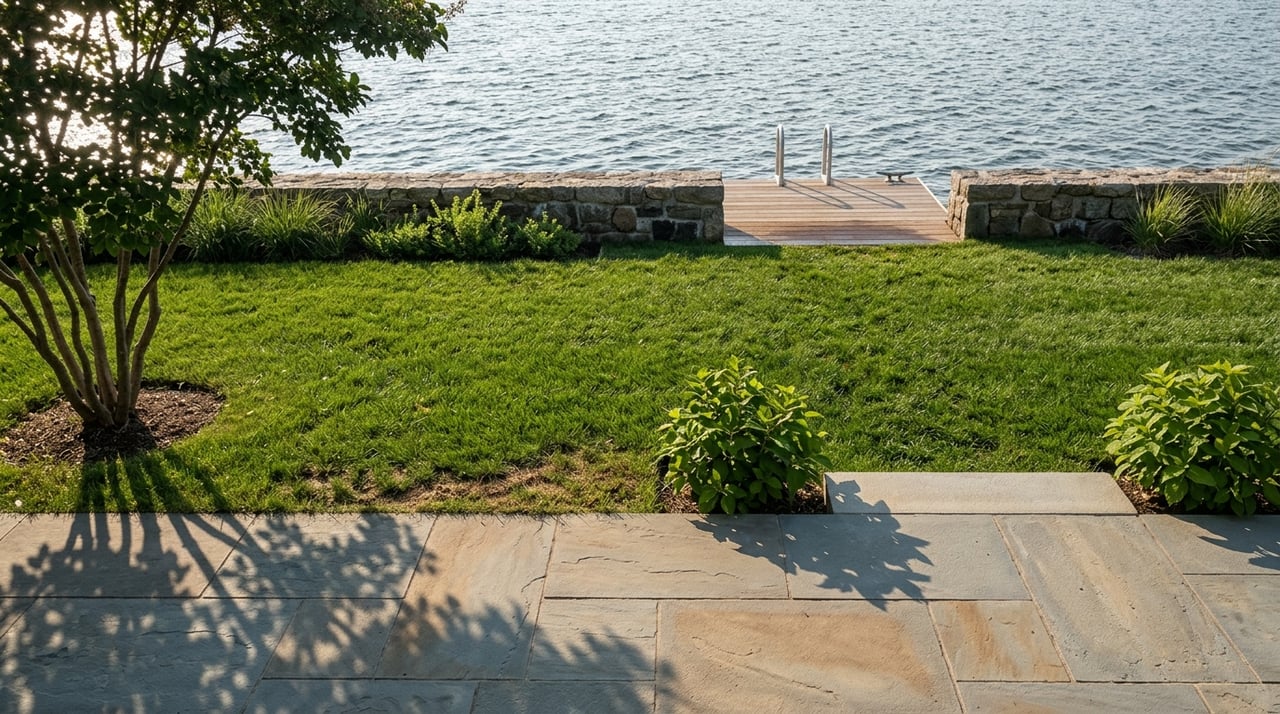
Waterfront And Water View Value In Cold Spring Harbor
June 18, 2026
June 18, 2026
If you are looking at Cold Spring Harbor real estate, one question usually rises to the top fast: how much is the water really worth? In a market where prices already sit at a premium, the difference between direct waterfront, a strong water view, and simple access rights can be significant. Understanding what drives that value can help you price more accurately, shop more wisely, and avoid costly assumptions. Let’s dive in.
Cold Spring Harbor is one of the Town of Huntington’s five harbors and sits near the Nassau-Suffolk boundary in a high-value North Shore market. Public market snapshots vary by source, but they generally place the area in the high-six to mid-seven figures, with Realtor.com showing about 20 homes for sale, a median listing price around $1.9 million, and a ZIP 11724 median home sale price of $2.5 million. Redfin describes the market as very competitive, with homes selling in about 38.5 days.
Research on coastal housing consistently finds that waterfront and water-view homes often sell at a premium. The exact premium can vary based on the quality of the view, the market cycle, and how limited the shoreline supply is. In a place like Cold Spring Harbor, where true waterfront opportunities are scarce, that scarcity tends to matter.
In simple terms, the market often sorts these homes into a basic hierarchy. Direct waterfront usually sits at the top, followed by homes with meaningful water views, then homes with access rights such as beach use, mooring rights, or dock privileges. That does not mean every waterfront home outranks every view home, but it is a helpful starting point.
What changes value most is not just whether water is involved, but how it is involved. Buyers tend to respond to a combination of view quality, privacy, access, and convenience. In Cold Spring Harbor, those details can move pricing meaningfully.
Not all views carry the same appeal. Local listing language repeatedly highlights western exposure, sunsets, and protected harbor settings, which suggests these are features buyers notice and value. Broad, open sightlines with living spaces facing the water usually feel more compelling than narrow or partial glimpses.
A view that can be enjoyed from the main entertaining rooms often has more impact than one seen only from a secondary bedroom. If the water is a daily visual feature of the home, rather than a small bonus, it is more likely to influence pricing. That distinction matters when comparing one property to another.
A strong water view is not just about what you see today. Buyers also want to understand how durable that view is over time. If sightlines are broad and unobstructed, the view tends to feel more secure and therefore more valuable.
This is one reason inland comparisons can fall short. A home with even a non-waterfront lot may command a stronger price if the orientation, elevation, and room layout create a more memorable harbor experience. In this niche, emotional response and practical value often meet.
Elevation plays two roles at once. First, it can improve the feel of a view by opening the sightline. Second, it can affect flood risk, since flood exposure depends on location, distance to water, ground elevation, and whether the building is elevated above ground.
Higher first-floor elevations may reduce risk compared with lower-lying homes near the shoreline. That does not eliminate the need for due diligence, but it can change how a buyer weighs value. In a waterfront setting, the best view is often the one paired with a more comfortable risk profile.
In Cold Spring Harbor, water-oriented homes are often paired with larger, estate-style settings. Public examples in the market include homes on roughly 0.82 acres and 1.8 acres, showing how view homes can also offer separation from neighbors. That added privacy can strengthen value because buyers are not paying only for water, but also for space and setting.
This is especially important in the luxury segment. A harbor-facing home with room to breathe often appeals differently than a similar view on a tighter lot. The setting becomes part of the overall experience.
For many buyers, the value story goes beyond the view. A private dock, mooring rights, beach access, boat ramp use, or similar privileges can materially affect how a property is priced and how it compares with other listings. In local listing examples, these rights are often front and center in the marketing.
That said, access rights are not all the same. A right may be deeded, permitted, seasonal, or controlled by the Town of Huntington through Maritime Services. Buyers should verify exactly what transfers with the property rather than relying on broad marketing language.
Sellers can protect value by organizing clear documentation before going to market. If a home includes shoreline improvements or access-related benefits, having permits, approvals, surveys, and supporting records ready can make the offering stronger and easier to understand. Unclear rights can slow a sale or weaken negotiating power.
For buyers, this is one of the biggest areas where careful review matters. Two homes may appear similar online, but one may include legal, transferable benefits that the other does not. That difference can justify a meaningful spread in value.
Cold Spring Harbor value is not only about being near the water. It is also about how easily you can enjoy the village setting around it. The village highlights Main Street shops and restaurants, the Green Belt Trail, Cold Spring Harbor Park, the marina, kayak access, the Whaling Museum, and the Fish Hatchery.
That blend of harbor setting and everyday convenience can lift demand. Public listings often emphasize proximity to Main Street, Eagle Dock Beach, waterfront parks, trails, and the village center. For many buyers, the premium comes from pairing water-related living with a connected, walkable lifestyle.
When you are evaluating a Cold Spring Harbor property, inland comps may not tell the full story. A sound comparison should reflect similar view orientation, access rights, lot setting, and village proximity whenever possible. Without that, pricing can look confusing fast.
This is where nuance matters. A house with a partial seasonal glimpse of water should not be measured the same way as one with broad harbor views from major living spaces. Likewise, a home with deeded beach or mooring rights may compete in a different lane than a home without them.
Shoreline work in the Town of Huntington is tightly regulated. Marine Conservation permits can apply to dredging, bulkheads, docks, and other shoreline reconstruction, and the town treats this as a building-permit-type review for the waterfront. CEHA permits may also be required in designated coastal erosion hazard areas.
New York DEC also notes that tidal wetlands permits can apply to boat ramps, boat slips, docks, piers, wharves, bulkheads, seawalls, excavation, grading, and related work. Work should not begin before all required permits are obtained. For buyers and sellers alike, that makes permit history a major part of value and risk review.
Flood and insurance review should be part of the pricing conversation early. New York DFS states that standard homeowners policies do not cover flood and that flood insurance is usually purchased separately through the National Flood Insurance Program. DFS also notes that flood policies generally have a 30-day waiting period.
FloodSmart states that high-risk A and V zones require flood insurance for government-backed mortgages, and it also notes that nearly one-third of NFIP claims over the last decade came from outside high-risk zones. DFS further notes that hurricane deductibles may apply in Nassau and Suffolk counties. In practice, that means buyers should understand both current cost and future insurability before they commit.
If you are preparing to sell a waterfront or water-view home in Cold Spring Harbor, presentation and documentation should work together. The market often rewards clear, well-supported value stories, especially when rights, views, and location are part of the appeal. A strong listing should show not only that the home is attractive, but why it stands apart.
Focus on the details that buyers actually price in:
For higher-value homes, that level of preparation can improve both confidence and positioning. It also helps reduce the risk of a buyer discovering important issues late in the process.
If you are buying in this niche, ask direct questions before you fall in love with the view. Water-oriented homes often come with added layers of review, and getting answers early can save time and reduce surprises.
A useful early checklist includes:
In Cold Spring Harbor, the strongest buying decisions usually come from looking at the full picture. The view may draw you in, but the details behind it are what shape long-term value.
If you are weighing a waterfront, water-view, or access-rights property in Cold Spring Harbor, a local read on pricing and property details can make a meaningful difference. For thoughtful guidance on positioning, valuation, and the details that matter in this niche, connect with Laura Zambratto.
Stay up to date on the latest real estate trends.

Get assistance in determining current property value, crafting a competitive offer, writing and negotiating a contract, and much more. Contact me today.