Architectural Styles That Define Locust Valley Homes
May 7, 2026
May 7, 2026
If you have ever driven through Locust Valley and felt like no two streets tell quite the same story, you are not imagining it. This is a market where early landmarks, Gold Coast influence, postwar homes, and newer traditional builds all live side by side. Understanding those layers can help you better read a home’s character, upkeep needs, and long-term appeal. Let’s dive in.
Locust Valley’s housing story is shaped by centuries of change rather than one single building era. The hamlet was settled in 1667, renamed in 1856, and connected by rail by about 1870, which helped support later growth in the area.
Its broader identity also extends beyond a compact village center. Locust Valley is closely tied to nearby communities such as Lattingtown, Matinecock, and Mill Neck, and that wider North Shore context helps explain why the local housing stock feels so varied.
Historic references remain visible in the area today. Local landmarks include the 1725 Matinecock Friends Meeting House and dwellings dating to around 1698, while the surrounding North Shore also reflects the legacy of Gold Coast estate culture and picturesque design.
For buyers and sellers, that means style labels only tell part of the story. In Locust Valley, rooflines, siding, porch depth, symmetry, and landscape setting often reveal more than the headline description in a listing.
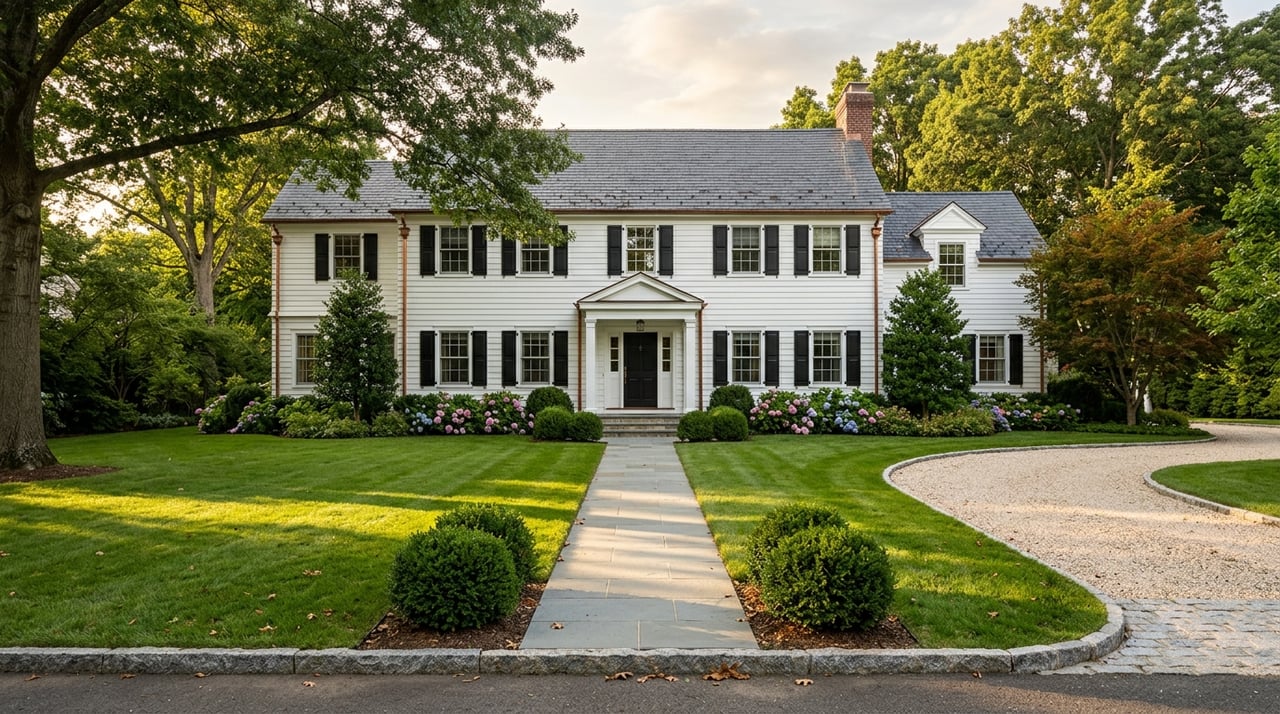
Among publicly visible listings, Colonial homes and Colonial variants appear most often in the Locust Valley area. You will see labels such as Colonial, center-hall Colonial, Cape/Colonial, and Hampton-style Colonial used across the market.
These homes tend to share a sense of balance and familiarity. Colonial Revival features often include symmetrical facades, double-hung windows, columns or pilasters, intersecting or hipped roofs, and a defined front porch.
That combination gives many Locust Valley Colonials a formal look that still feels comfortable and livable. It is one reason this style continues to appeal to a wide range of buyers.
Colonials often feel intuitive to live in. Their room layout, curb appeal, and traditional exterior details create a sense of structure that many buyers find timeless.
They also tend to photograph well, which matters in a design-conscious market. A centered entry, balanced windows, and a well-defined facade can create a polished first impression both online and in person.
From a practical standpoint, Colonial homes are often easier to adapt than more specialized styles. Their symmetry and room hierarchy can support updates like larger kitchen and family areas while still preserving the home’s original character.
For sellers, that broad appeal can be a major advantage. For buyers, it often means a Colonial offers a blend of familiarity, flexibility, and lasting resale appeal.
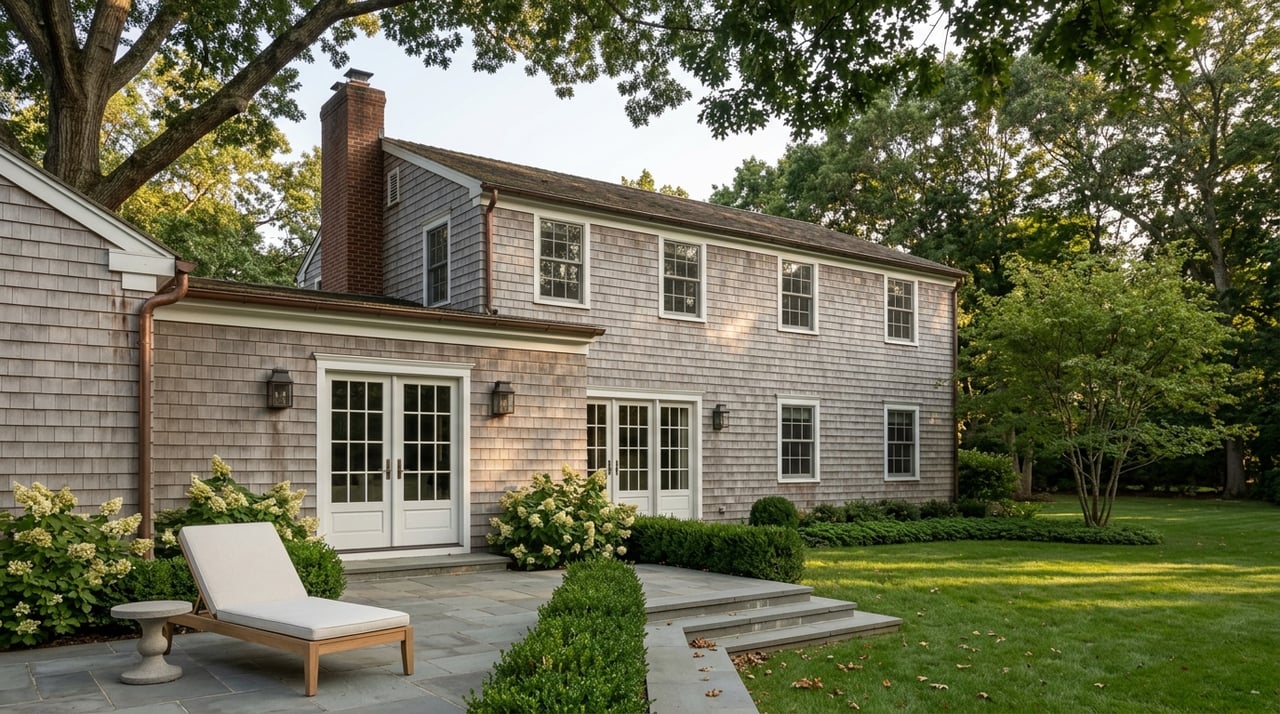
At the upper end of the Locust Valley market, shingle-clad and Hampton-style homes stand out as a defining part of the area’s architectural identity. Public listings often blend terms like estate Colonial, Hampton style, and shingle construction, which points to a shared visual language more than a rigid category.
These homes are closely tied to the North Shore’s Gold Coast history. They often feature substantial exteriors, long approach drives, deep porches, and a sense of privacy that feels elevated without being overly formal.
Nearby architectural references reinforce that tradition. Sagamore Hill in Oyster Bay, known for its Queen Anne and shingle-style profile, reflects the same regional preference for textured exteriors, complex rooflines, and porch-centered design.
In Locust Valley, these homes often signal a more estate-like setting. You may notice cedar or shingle siding, larger lots, landscaped entries, and exterior forms designed to feel relaxed yet substantial.
The style often reads as both classic and resort-like. That is part of what makes it so closely associated with North Shore luxury.
Style affects maintenance, and shingle-clad homes often require more material-specific care. According to the National Park Service, wooden shingle roofs may need periodic replacement and can last from 15 to over 60 years depending on conditions.
When repairs are needed, matching the size, shape, texture, and installation details matters. That makes preservation and renovation decisions more detailed than they might be on a simpler exterior.
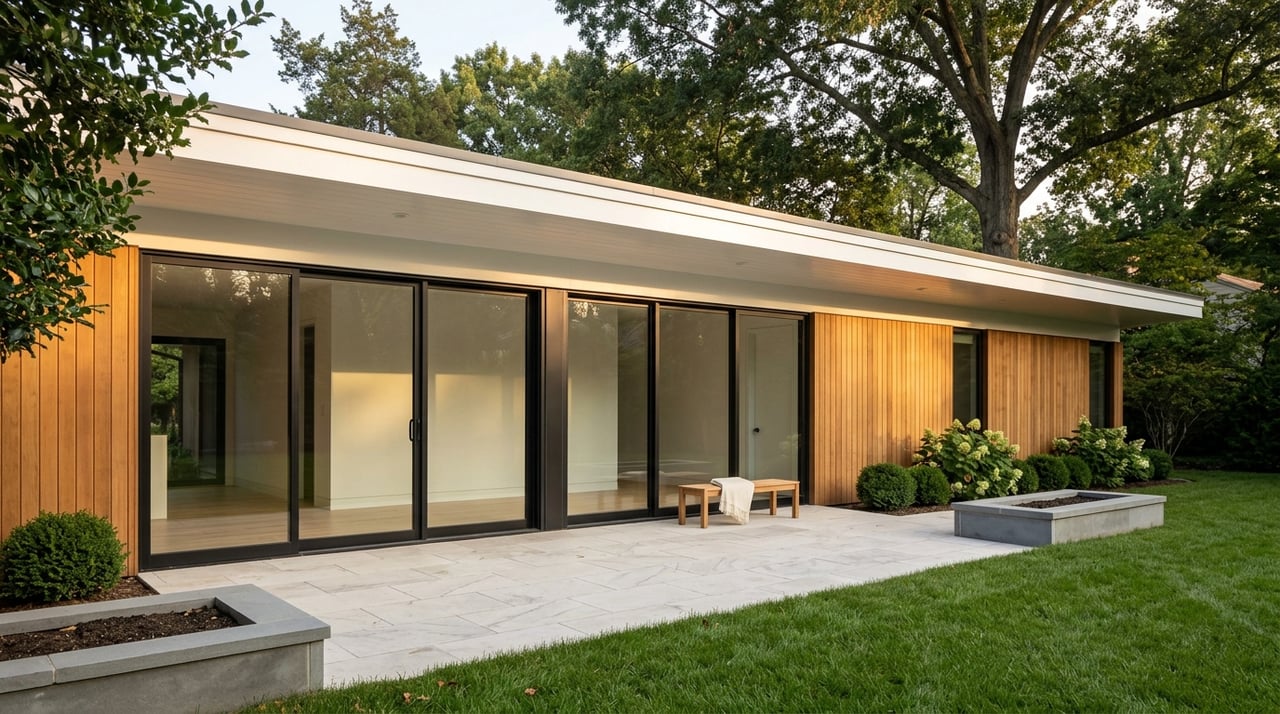
Not every Locust Valley home is formal or estate-scaled. Mid-century ranches and split-levels appear in smaller-lot and more neighborhood-oriented pockets, offering a lower, more horizontal profile.
These homes usually feel more casual from the street. Compared with Colonials and larger shingle-style properties, they often emphasize ease of living, natural light, and a stronger indoor-outdoor connection.
That design approach aligns with the broader ranch-house pattern identified by the National Park Service. Common features include open floor plans, zoned living spaces, large communal areas, picture windows, and sliding doors.
If you value light, flow, and a more informal daily routine, this style can be especially appealing. Ranches and split-levels often support one-level living or flexible family space in a way that feels practical and approachable.
They also tend to attract design-minded buyers who appreciate clean lines and a less traditional layout. In Locust Valley, that can offer a refreshing alternative to more formal architecture.
These homes can renovate beautifully, especially when the goal is to preserve openness and maximize light. At the same time, changes to rooflines, windows, or facade rhythm need careful thought because those elements are central to the style.
Maintenance priorities may also differ from older traditional homes. Broad glass areas, insulation, and roof performance often deserve closer attention.
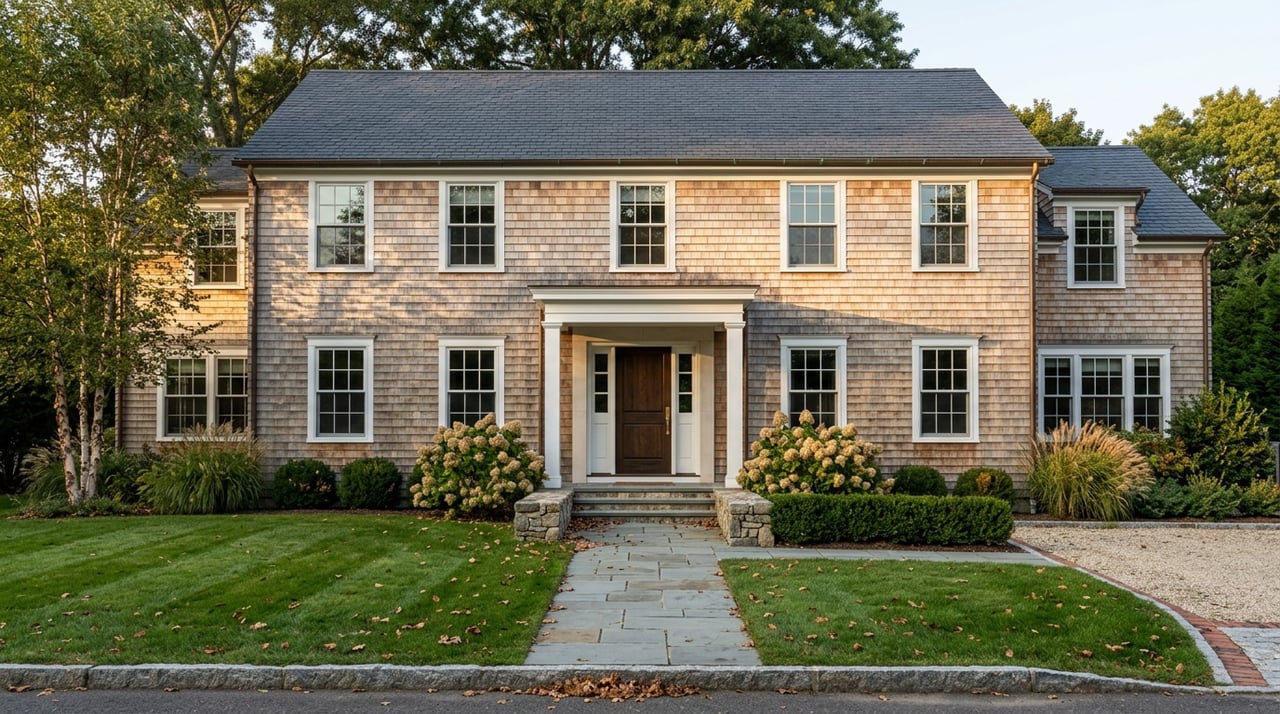
While new-build inventory appears limited in the public sample, it is part of the Locust Valley market. What stands out is that newer homes usually follow traditional North Shore design vocabulary instead of moving toward stark contemporary forms.
In practice, that means you are likely to see new construction with features like shake siding, stone details, and center-hall Colonial layouts. Even when a home is newly built, buyers often expect it to feel visually consistent with the surrounding setting.
That local preference shapes how new homes are received. In Locust Valley, convenience and newer systems matter, but so does architectural fit.
For buyers, new construction can mean lower near-term maintenance and updated systems. For sellers and developers, it also means design decisions need to respect the established character of the area.
A newly built home may be judged not just on finishes, but on whether it feels rooted in the North Shore landscape. That is a key difference in a market where design continuity matters.
In Locust Valley, architectural style often acts as shorthand for lifestyle. A Colonial may suggest timelessness and broad appeal, while a shingle-clad estate may signal privacy, scale, and Gold Coast character.
A mid-century home may appeal to buyers who value light and informality, while new construction often attracts those looking for convenience and newer materials. These perceptions are not just aesthetic. They can shape pricing, marketing, and the pool of likely buyers.
For sellers, that means presentation matters. In a highly visual market, photography, exterior details, and landscape setting can carry as much weight as the style label itself.
For buyers, it means looking beyond the listing headline. The most useful clues are often found in the home’s proportions, materials, and site placement.
If you are comparing homes in Locust Valley, it helps to focus on a few key details:
These details can help you understand whether a home feels true to its style, how it may function day to day, and what future updates could involve.
Locust Valley is best understood as a layered North Shore design market. Historic landmarks, Gold Coast estate influence, postwar suburban forms, and newer traditional construction all contribute to its identity.
That variety is part of what makes the area so compelling. It also means that reading a home well takes more than spotting a style label.
If you are buying, style can help you anticipate maintenance, renovation potential, and lifestyle fit. If you are selling, understanding your home’s architectural language can shape stronger pricing, presentation, and marketing decisions.
When you want thoughtful guidance on how a home’s design, condition, and market position come together in Locust Valley, working with an advisor who understands both architecture and strategy can make all the difference. To start the conversation, connect with Laura Zambratto.
Stay up to date on the latest real estate trends.
Get assistance in determining current property value, crafting a competitive offer, writing and negotiating a contract, and much more. Contact me today.