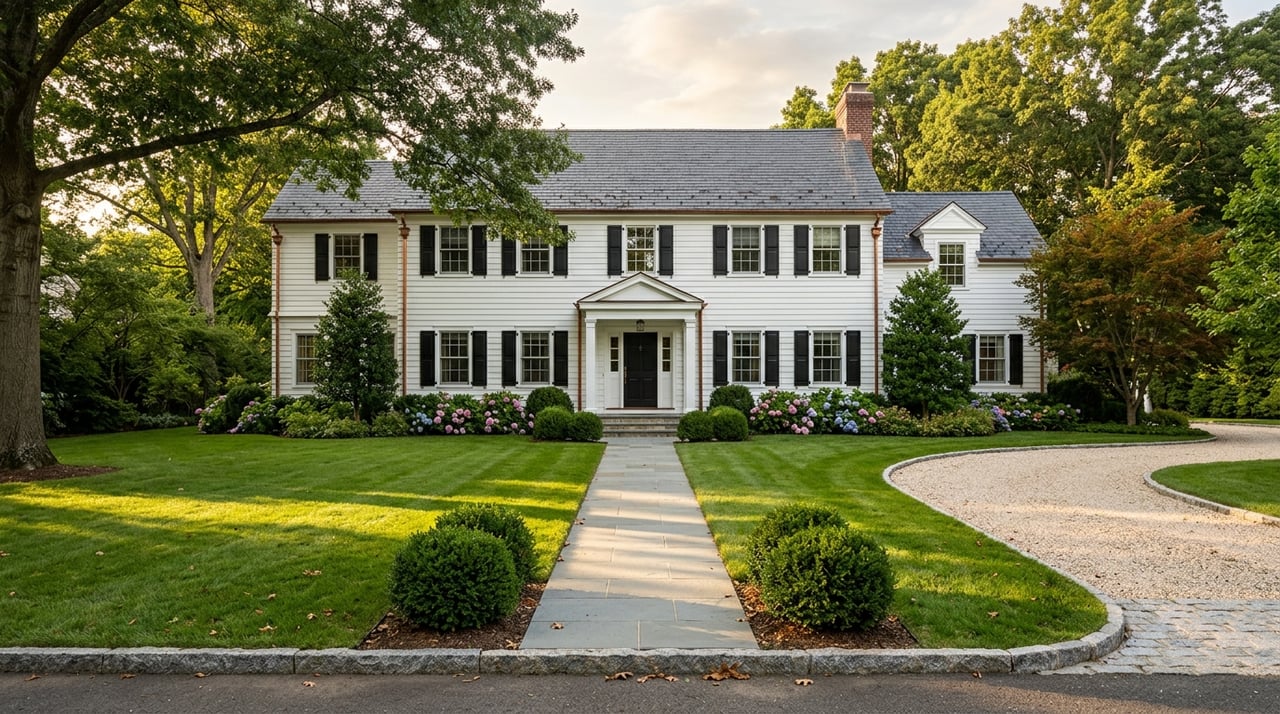
Cold Spring Harbor Homebuyer Neighborhood Guide
May 14, 2026
May 14, 2026
If you are thinking about buying in Cold Spring Harbor, you are likely looking for more than just a house. You are looking for a setting, a daily rhythm, and a neighborhood that feels distinct from other North Shore communities. This guide will help you understand what makes Cold Spring Harbor unique, what kinds of homes you will find, and what practical details matter most before you make a move. Let’s dive in.
Cold Spring Harbor has a strong sense of place. Its history ties back to milling, port activity, whaling, and later its growth as a resort town, and that heritage still shapes the community today.
The village centers around a small business area along Route 25A and Main Street rather than a large downtown. That gives the area a more intimate feel, with local landmarks and public spaces helping define the day-to-day experience.
You will also notice how closely the neighborhood identity connects to the harbor and local institutions. The Whaling Museum, Fish Hatchery and Aquarium, Uplands Farm Sanctuary, Fire House Museum, and Cold Spring Harbor State Park all contribute to a setting that feels rooted in history and nature.
Cold Spring Harbor is a small, high-value market. Census Reporter’s 2024 ACS profile shows 3,220 residents in 3.4 square miles, with a median owner-occupied home value of $1.588 million and a median household income of $250,001.
It is also a commuter-oriented area. The same profile reports a mean travel time to work of 33.6 minutes, which helps explain why rail access and parking often become part of a buyer’s neighborhood decision.
For you as a buyer, that means Cold Spring Harbor may be especially appealing if you want a North Shore location with a close-knit feel, a strong visual identity, and access to both outdoor amenities and regional commuting options.
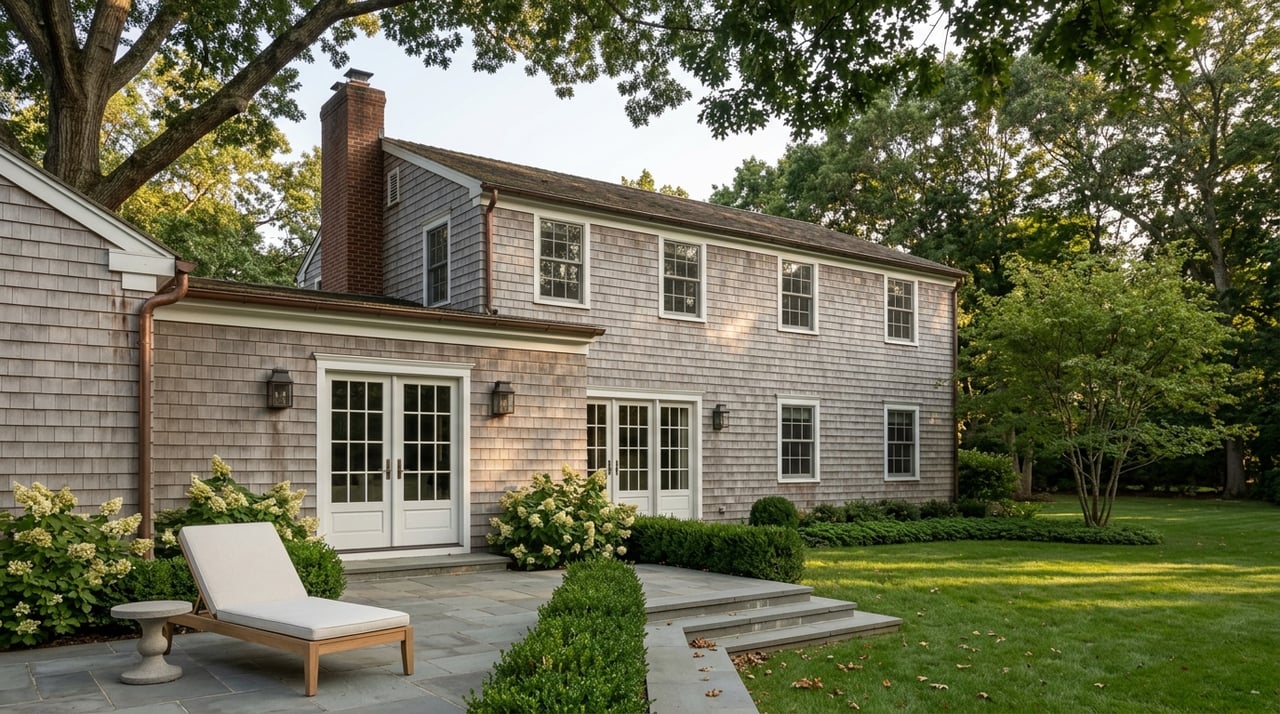
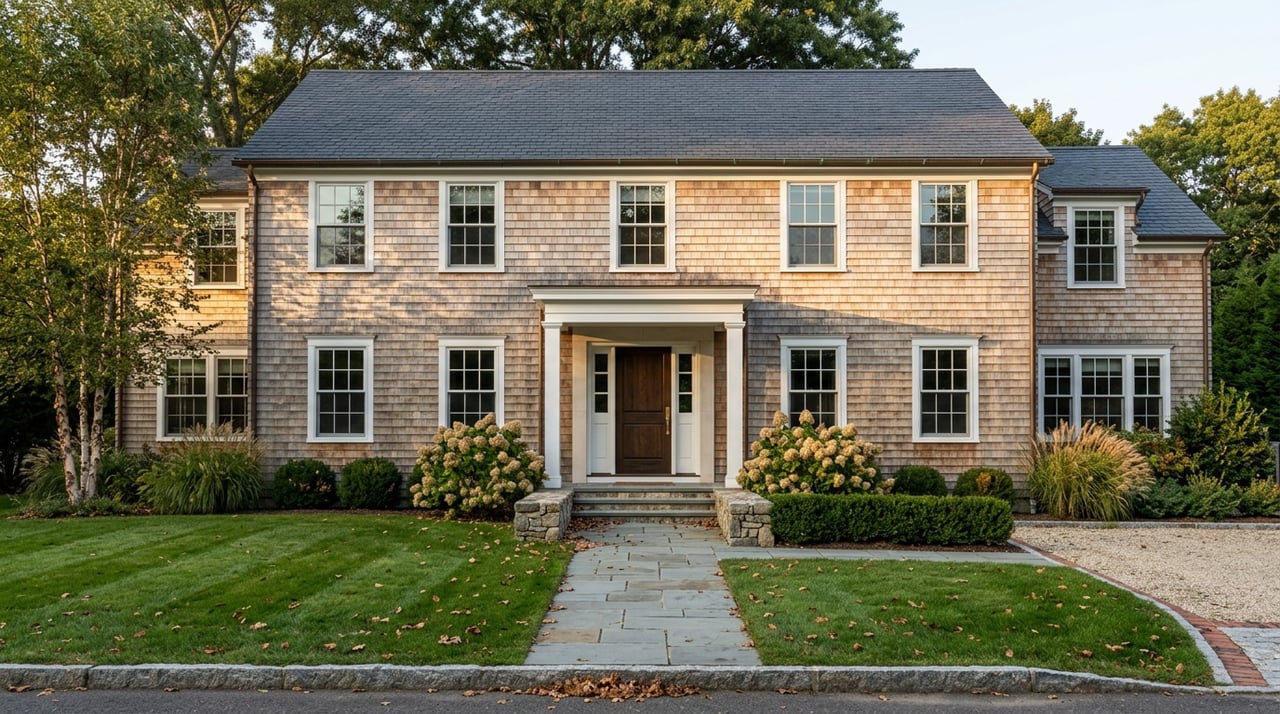
Cold Spring Harbor is largely a detached single-family home market, but the housing stock is not one-note. Current public listings show a wide spread in both age and scale, from older village homes to large newer estates.
Representative listings include homes dating to 1836, 1910, 1931, and the 1950s and 1960s, along with newer construction from 2018 and 2025. That range matters because homes here can differ significantly in layout, systems, lot size, and renovation history.
Lot sizes vary just as much as home styles. Visible inventory includes compact village lots around 0.25 acres, mid-range properties around 0.34 to 2 acres, and larger estate-scale parcels above 3 acres and even over 6 acres.
Some buyers are drawn to the convenience and charm of homes closer to the village core. These properties may offer easier access to local amenities and a more compact homesite.
Others are looking for privacy, larger lawns, or estate-style settings. In Cold Spring Harbor, both options exist, but they come with different maintenance needs, pricing expectations, and property evaluation questions.
Older homes often bring architectural character and established settings. At the same time, they may require closer review of updates, mechanical systems, and property history.
Newer homes can offer modern layouts and recent construction, but they often sit at the higher end of the price range. If you are comparing older and newer properties here, it helps to look beyond finishes and focus on site conditions, systems, and long-term fit.
In Cold Spring Harbor, waterfront-oriented properties can sit in a category of their own. Some public listings advertise features such as private docks, beach rights, or mooring rights.
These details can be major differentiators in both value and lifestyle. If you are considering a harbor-adjacent home, you will want to understand exactly what rights transfer with the property and how those features affect both use and pricing.
Because these homes are often more specialized, careful due diligence is especially important. A property’s water access features may be as important as the home itself when you compare options.
Cold Spring Harbor is an expensive and relatively tight market, but it is not all one price band. Public listing snapshots show visible inventory ranging from an $899,000 land parcel to homes listed at $1.299 million, $1.333 million, $1.735 million, $1.775 million, $1.895 million, $3.995 million, and $8.995 million.
Market snapshots also show some variation depending on source and measurement date. Redfin reported a February 2026 median sale price of $1.2425 million and described the market as very competitive, while Zillow’s home value index was $1.672 million as of March 31, 2026.
Realtor.com’s April 2026 snapshot showed 20 active listings citywide with a median listing price of $1.895 million and 54 days on market. Its ZIP code 11724 snapshot showed 14 listings, a median listing price of $2.35 million, and 62 days on market.
The practical takeaway is that inventory appears limited and segmented. You may see entry points that look lower on paper, but the market quickly steps up into the mid-$1 million range and then into a higher-end luxury tier.
That makes preparation important. If you are shopping in Cold Spring Harbor, it helps to know early whether your target is a village home, a larger updated property, land, or a luxury estate, because each segment can behave differently.
Cold Spring Harbor’s tight inventory and competitive conditions tend to reward buyers who are organized. In a market where many homes are older, improved over time, or highly customized, sellers often respond best to buyers who can move with clarity.
That usually means having preapproval in place, understanding your budget comfortably, and being ready to make timely decisions. It also means being realistic about inspections, financing discussions, and appraisal conversations before you enter negotiations.
In a market like this, preparation is not just about speed. It is about reducing uncertainty so you can evaluate opportunities confidently when the right property appears.
One of the most important practical points in Cold Spring Harbor is home systems due diligence. Public listings show that many homes note cesspool wastewater service along with public water.
If you are considering an older property, that is not a detail to gloss over. Wastewater systems, property age, and renovation history can all affect how you assess condition, future improvements, and ownership costs.
This is where a careful eye matters. When homes vary so widely in vintage and updates, you want to evaluate not only the design and layout, but also the less visible parts of the property that shape your long-term experience.
For many buyers, commuting is part of the neighborhood decision. Cold Spring Harbor station is on the Long Island Rail Road Port Jefferson Branch, with westbound service to Jamaica, Penn Station, and Grand Central.
The station has ticket machines, a weekday waiting room, and no ticket office. The MTA also notes that while the station is accessible by ramp, there is no accessible path of travel between the platforms, so vehicular drop-off or pick-up may be needed in some situations.
Parking is a key part of using the station. The Town of Huntington requires commuter permits Monday through Friday from 6:00 a.m. to 5:00 p.m. in restricted LIRR lots that include Cold Spring Harbor.
The town lists a resident commuter permit fee of $75. It also identifies a Cold Spring Harbor metered lot in its Passport Parking system, which is worth factoring into your routine if train access is part of your home search.
Cold Spring Harbor offers a lifestyle shaped by open space and harbor views as much as housing. Cold Spring Harbor State Park is a 40-acre park with hiking trails, birdwatching, jogging, scenic views, and year-round sunrise-to-sunset access with no fee.
The town trail guide notes a one-mile trail and steep terrain. The park also serves as the northern trailhead of the Nassau-Suffolk Greenbelt Trail, which adds to its appeal if you enjoy outdoor recreation as part of your weekly routine.
Beyond the park, the area’s identity is reinforced by its local attractions and institutions. Rather than relying on a large commercial center, Cold Spring Harbor offers a more concentrated mix of heritage, nature, and village-scale amenities.
Cold Spring Harbor is not a one-size-fits-all market, and that is part of its appeal. Some buyers want a historic home near the village, some want more land and privacy, and others are focused on waterfront possibilities or a specific commute pattern.
The right fit often comes down to how you weigh character, lot size, property condition, and day-to-day logistics. In a market with older homes, limited inventory, and a wide pricing spread, those tradeoffs matter.
If you want clear guidance while comparing homes in Cold Spring Harbor and nearby North Shore communities, Laura Zambratto offers the kind of local insight and technical perspective that can help you make a confident decision.
Stay up to date on the latest real estate trends.
Get assistance in determining current property value, crafting a competitive offer, writing and negotiating a contract, and much more. Contact me today.